Showing posts with label Volkswagen. Show all posts

Sunday, January 15, 2012

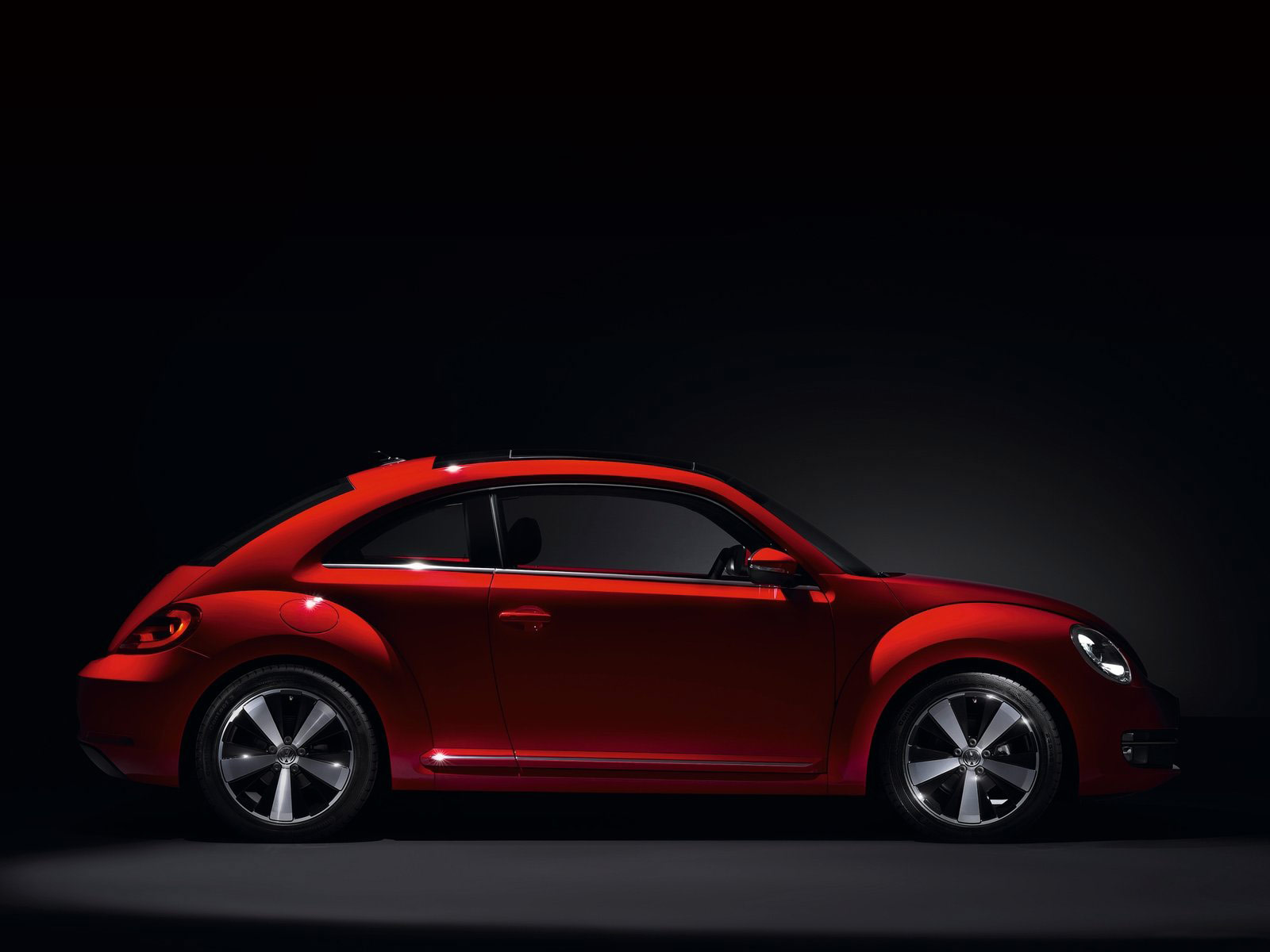
2012 Volkswagen Beetle


VW Beetle

A look back to the start: at the beginning Volkswagen built one of the most successful cars of all time and did not even give it a name. Why should it? After all, it was the Volkswagen! People loved it, and on all of the world's continents the small car was nicknamed according to precisely what it looked like: Beetle, Käfer, Vocho, Coccinelle, Fusca, Maggiolino or ???! It embodied the automotive concept itself and symbolised the democratisation of mobility. 21.5 million cars were sold. Then the New Beetle arrived in 1998. It introduced a new automotive feeling to the world and brought with it Beetle Mania. In 2010, the Final Edition completed the New Beetle series that had sold more than one million cars. And now? A look forward. The future of the most famous car in the world begins now. In a completely new generation. It's The Beetle! And because Volkswagen and the Beetle call the globe their home, the new car is celebrating a transcontinental world debut - simultaneously in Shanghai, Berlin and New York .

Technological goal: high-tech in harmony with the environment

Volkswagen Beetle is an icon. This car tells a story. Only someone who knows its history could make a new generation of this Volkswagen a reality. The task ahead for the engineers was very clear. They had to develop a high-tech car that was still affordable, did not leave any stone unturned, integrated the communication technologies of our times and of course achieved the lowest environmental impact. It also had to be a car that places driving fun at the forefront. The new generation VW Beetle would have to be a very agile, dynamic performer, and the people who developed the Golf GTI would also be able to achieve this.

No previous Beetle was this fuel efficient. High performance no longer suffices by itself: At 4.3 l/100 km (European 1.6 TDI) and 33 mpg (American 2.0 TDI), the new Volkswagen Beetle is the most fuel-efficient Beetle ever.

Design target: "Design a new original!"

The most recognisable automotive design in the world. Coke bottle, iPhone, Ray Ban Aviator, Beetle - how does one reinvent a design that is so recognisable and independent? There is a clear answer to this: It is necessary to understand the product and the brand; then it works! Volkswagen Design Chief Walter de Silva (Group) and Klaus Bischoff (Volkswagen Brand) "understand" both and therefore they set this as the objective for the Beetle: "Design a new original!"

Challenge as a thrill. The team began its task under Bischoff's guidance. The challenge of designing a new Volkswagen Beetle was inspiring. The designers knew that they wanted to develop the original Beetle profile more than on the 1998 New Beetle. They also made very dynamic proportions a high priority. An interesting aspect was that more than a few team members actually own their own air-cooled Beetles. It has also become a cult car among younger designers at Volkswagen. And that is how the final design of the 2011 Beetle came to be in Wolfsburg - a car of today as well as a design tribute to the automotive seed of an entire corporate group. And unmistakable indeed: If one were to take the first Beetle and the new Beetle and place them in a room together - shining light just over the roofs and viewing them from the side - one would see that the lines of the rear sections are nearly identical.

No standing still: "We remade every part."

Bolder, more dynamic, more masculine. A comparison to the 1998 New Beetle shows this: nothing remained as it was on the old car: "The Beetle is now characterised by a clean, self-confident and dominant sportiness. The car not only has a lower profile; it is also substantially wider, the front bonnet is longer, the front windscreen is shifted further back and has a much steeper incline. All of this creates a new dynamism," explains Klaus Bischoff. While the New Beetle was defined by three semi-circles (front wing, rear wing, domed roof above it), the new model has broken free of this geometry. The roof profile actually runs distinctly lower and can be considered a continuation of the Ragster concept car shown in Detroit in 2005 - a type of hot rod based on the New Beetle. The new Beetle is bolder, more dynamic, more masculine.

The figures confirm this: The new car is 1,808 mm wide (84 mm wider), 1,486 mm tall (12 mm lower) and 4,278 mm long (152 mm longer). This has resulted in entirely new proportions. The gain in length meant that the roof could be extended further, the front windscreen could be shifted back, and the rear section could follow the contour of the original Beetle. The new focal point is the C-pillar. In parallel, the development team increased the car's track widths and wheelbase. All of this gives the VW Beetle a powerful appearance with muscular tension.

Typical Volkswagen, typical Beetle: a new DNA

2011 styling. Despite all of its individuality, the styling follows the Volkswagen design DNA created by Walter de Silva and Klaus Bischoff. It clearly expresses itself in the horizontal image of the front bumper, front air inlet, straight lines of the bonnet edges, the precisely drawn line between the A-pillar and C-pillar and the styling of the rear lights.

Beetle, Microbus, original Golf. And yet it was possible to preserve all of the Volkswagen Beetle's typical styling characteristics. This should come as no surprise; after all, it was vehicles like the Beetle, Microbus and original Golf that had a decisive influence on Volkswagen's "design DNA." Of course, some of the Beetle's longstanding characteristics remain: these include its round headlights (optional bi-xenon headlights with LED daytime running lights are available for the first time in this model series), the flared wings, the shapes of the bonnets, sides and door sills and - more than ever - the large wheels (up to 19 inch) that can be integrated. A new feature is the rear spoiler that is homogeneously integrated in the design (standard for TSI engines with 118 kW / 160 PS and 147 kW / 200 PS); it aggressively maintains contact with the road on this Volkswagen, which has a top speed of up to 225 km/h, depending on the engine, and is available in the three equipment lines "Beetle", "Design" and "Sport". Incidentally, the top surface of the rear spoiler is always black, while its underside is painted in body colour. These colours - 12 different hues - will make everyday car driving more vibrant with names such as "Saturnyellow" and "Denim Blue".

An original interior like no other

The cockpit makes a visual impression. Is it possible for a cockpit to make an impression? Are you kidding? By its very nature! Car drivers sit in the cockpit. Sometimes for hours at a time. And yet, there are cars whose cockpits do not leave any lasting impression. They have a "look alike" appearance, as the marketing people say - one easily mistaken for another, lacking charisma. The VW Beetle's cockpit, on the other hand, is unique, unmistakable, cool, classic and designed with a passion for detail. This cockpit is perceived as something special.

Everything within reach and sight. The shape and use of colour in the painted or carbon-look front facia panel of the dashboard hark back to the design of the first VW Beetle, yet the new car does not have a retro look. In Europe, for example, this facia is styled in "Schwarz uni" (Black) on the base model ("Beetle"); in the "Design" equipment line, it is always painted in the specific exterior colour. Customers choosing the "Sport" level get the carbon look ("Carbon Fibre"). Regardless of which colours are used, Volkswagen drivers will be able to locate every interior feature with their eyes closed.

And yet everything has been redesigned. Three round instruments arranged in front of the driver (tachometer, speedometer, fuel gauge) provide all key information; integrated in the speedometer (middle position) is a multifunction display. From the "Design" equipment level, the adjustable air vents and the instruments have chrome bezels. This also applies to the audio/navigation systems optimally located in the driver's visual field on the dashboard, framed by two air vents. This also includes the controls for the climate control system. Everything is within grasp and sight.

Comeback of the glovebox. Similar to the original Beetle, the new car has an extra glovebox integrated in the front facia whose lid folds upward (the standard glovebox that is also integrated opens downward). Another classic feature: the optional auxiliary instruments above the selected audio/navigation system: oil temperature, clock with stopwatch function and boost pressure gauge. Also new: the steering wheels specially designed for the Volkswagen Beetle with optional painted accents in the spokes depending on the equipment line. Details like these clearly indicate that the occupants are in a Beetle - there's no mistaking it.

Air-cooled Beetle. New Beetle. The Beetle. A distinguishing feature of The Beetle - the third generation if you will - is that its interior ergonomics and packaging are based on completely new parameters. While drivers in the air-cooled Beetle travelled in a very low-slung seat, and drivers of the New Beetle felt as if they were chauffeured because the bonnet was so far forward, the latest Volkswagen Beetle now offers an agile, driver-oriented coupé experience. Every feature is within easy reach. In addition, Volkswagen has once again succeeded in implementing a quality of materials that goes beyond all class limits. The car's styling, ergonomics, operability and quality interact to create a new, friendly car with a highly individual nature.

The New Beetle was a cathedral inside. In front, the Beetle is now somewhat lower in profile, since the domed roof of its predecessor has been eliminated. It now offers 1,044 mm interior height instead of the previous 1,082 mm. However, the 38 mm will hardly be missed, even by very tall drivers, since the New Beetle's interior was a "cathedral" among compact cars. Meanwhile, in the rear seating area, the longer roof section results in a distinctly larger feeling of space. The bootspace is significantly larger; it now holds 310 instead of 209 litres. As usual, the car has a split, folding rear seatback, and a wide opening bootlid making it is easy to load and unload.

More optional features: individualising the VW Beetle

"Beetle", "Design" and "Sport". The new Volkswagen will be available worldwide in the three equipment lines "Beetle", "Design" and "Sport". Each of these versions has a very unique character. In addition, individual markets themselves will emphasise certain aspects. Volkswagen will announce individual parameters of these customisation levels at an international driving presentation for journalists. In addition to the three equipment lines, the Beetle can be customised with a wide choice of optional features. An overview of certain key features:

Bi-xenon headlights and LED daytime running lights. Volkswagen is offering the Beetle with bi-xenon headlights for the first time. 15 LEDs frame the xenon module on the outer perimeters of the headlights; they implement the daytime running lights and parking lights.

Panoramic roof. It is transparent, and it can be tilted or opened. Therefore, the exact name is: panoramic tilt/slide glass sunroof. Much more important: It is 80 percent larger (glass surface area) than on the previous model. Incidentally, the insulating glass blocks 99 percent of UV radiation and 92 percent of heat energy.

Radio-CD and radio-navigation systems. The New Beetle was exclusively available with radio-CD systems specially designed for this model. No navigation systems were offered. Now, Volkswagen is taking a completely different approach and is offering all of the systems available in other model series such as the Golf, Jetta or Passat on new VW Beetle as well. Standard in the Beetle is the RCD 310 with 8 loudspeakers, which is a very good audio system (includes dual tuner). The top audio system is the RCD 510 with integrated CD changer, interface for SD cards and touchscreen. An attractively priced entry-level radio-navigation system is the RNS 315 with 5-inch touchscreen (400 x 240 pixel), CD player, SD card slot and dual tuner. The top radio-navigation system model is the RNS 510. It offers refinements such as a 6.5-inch touchscreen, DVD player, voice control, SD card slot and 30 Gigabyte hard drive.

Premium sound system by Fender. Anyone knowledgeable about the world of rock music is familiar with such greats as Jimi Hendrix and Eric Clapton. The first played Fender guitars, while the latter still does. Now, the legendary producer of US musical instruments and amplifiers - in a joint venture with Panasonic - is exclusively sharing its know-how with the Volkswagen brand. The result is an optional Fender sound system that is being offered in the Volkswagen Beetle with an additional woofer and 400 Watts of output power. Those choosing this sound system also get adjustable interior ambiance lighting. Besides providing indirect illumination, it also includes two light rings around the loudspeaker boxes in the doors. In Europe, the Volkswagen Beetle is the first car to offer a Fender sound system.

Keyless Access. The Keyless Access locking and engine starting system is appearing for the first time in the Volkswagen Beetle; it operates without a door or ignition key. When one of the front door handles is touched, the system detects access authorisation from a transmitter carried in the person's jacket, trousers or hand bag; it then unlocks the Beetle and enables an engine start via the engine start button. Locking of the Volkswagen is from the outside, also activated by touching one of the two door handles; in this case, however, a specially marked surface is used.

All round safety. Let's get to the point. In The Beetle, Volkswagen is building an automobile that is one of the safest in terms of both active and passive safety. Naturally, the ESP electronic stabilisation programme is standard, as is an effective network of six airbags that protects in the passenger compartment. Naturally, the car body - much of it laser-welded and galvanised - exhibits one of the best torsional rigidity values in the segment at 26,000 Nm/º. Naturally, because safety is a fundamental quality in a Volkswagen.

Engines: top fuel economy of 40 mpg and 4.3 l/100km

US diesel with 140 PS. When it comes to engines, all signs point toward sustainability. In the USA, the VW Beetle will be offered as a turbodiesel for the first time. The Beetle 2.0 TDI (103 kW / 140 PS) meets all USA emission limits and attains 40 mpg fuel economy in the Highway cycle, 29 mpg in City driving, and 33 mpg combined. As a result, the Volkswagen Beetle is a good choice as one of the most fuel-efficient cars in its class. Incidentally, the Volkswagen not only has excellent fuel economy values in the version with a 6-speed manual gearbox, but also - and this is a technical debut in the Beetle as well - with the optional 6-speed dual clutch transmission.

US petrol engines with 170 PS and 200 PS. Fuel economy values were also improved in the 2.5-litre five cylinder petrol engine, which was already a success in the previous model. The manually shifted VW Beetle attains 22 mpg (City), 31 mpg (Highway) and 25 mpg (combined). Its counterpart with a 6-speed automatic comes in at 22 mpg (City), 29 mpg (Highway) and 25 mpg (combined) - this represents an increase of up to 10 percent in fuel economy. Pioneering: even the Beetle 2.0 TSI with 147 kW / 200 PS of power attains a combined fuel economy of 25 mpg. The large TSI is also available with an optional 6-speed DSG.

World engines with 105 PS, 140 PS, 160 PS and 200 PS. In markets such as Asia, Australia, Europe and New Zealand, the new Volkswagen Beetle will be offered exclusively with charged engines. All engine versions - all of them with four cylinders - are being used for the first time in this model series. The car exhibits significantly reduced fuel consumption and emission values compared to the previous model thanks to the switch to turbo-petrol (TSI) and common rail turbodiesel direct injection engines (TDI). The three charged petrol engines of the Beetle output 77 kW / 105 PS, 118 kW / 160 PS and 147 kW / 200 PS. The two diesel engines develop 77 kW / 105 PS and 103 kW / 140 PS (TDI engines are not offered in China). All five engines may be combined with a dual clutch transmission as an option.

Engines with 160 PS and 200 PS in detail. Even the fast moving 225 km/h VW Beetle 2.0 TSI with 200 PS of power consumes just 7.4 l/100 km (equivalent to 173 g/km CO2) with a manual transmission. Also extremely economical is the 1.4 TSI with 160 PS shifted by a 7-speed DSG; in the Beetle it consumes just 5.9 l/100 km (139 g/km CO2). Fuel economy data like this makes the Beetle 1.4 TSI DSG (top speed: 207 km/h) a pleasant surprise in the engine programme. By comparison, the previous model with 110 kW / 150 PS attained a value of 8.9 l/100 km in the automatic version. Despite 10 PS more power, fuel consumption was reduced by 3.0 l/100 km or 34 percent.

Differential lock for top petrol engine. To ensure that the power of the two strongest Volkswagen Beetle versions is applied properly to the road in quickly approached curves as well, the models with 160 PS (European version) and 200 PS (worldwide) come with a factory-installed XDS electronic differential lock. This system extends the familiar EDS functionality. XDS improves handling in fast curve driving and calibrates the car toward more "neutral" steering; it does this by using active brake intervention to prevent wheelspin of the unloaded wheel on the inside of the curve, and this improves traction.

Engines with 105 PS and 140 PS in detail. The most fuel-efficient petrol engined model is the Beetle 1.2 TSI with BlueMotion Technology (including Stop/Start system and battery regeneration) and 105 PS with a top speed of 180 km/h. It has a combined fuel consumption of 5.5 l/100 km (129 g/km CO2). The comparable previous model (75 kW / 102 PS) consumed 7.5 l/100 km. Savings: 2.0 l/100 km or 27 percent. An extremely sustainable performer is the Beetle 1.6 TDI with 105 PS. At 4.3 l/100 km (equivalent to 112 g/km CO2), this diesel version is the most fuel-efficient VW Beetle ever built with BlueMotion Technology. Its fuel consumption is 20 percent lower than even the existing TDI engines which have always been very fuel efficient. Incidentally, on the Autobahn, the new Beetle 1.6 TDI with BlueMotion Technology can reach a top speed of 180 km/h - in this case, fuel economy is not gained at the cost of performance. This is especially true of the even higher performance TDI with 2.0 litre displacement and 103 kW / 140 PS. This torque-strong turbodiesel (320 Nm from 1,750 rpm) takes the Volkswagen Beetle to a top speed of 198 km/h and combined fuel consumption of just 4.9 l/100 km (equivalent to 129 g/km CO2). This means that the Beetle for a new era will once again show how it can "go, and go and go ..." 

Wednesday, January 11, 2012

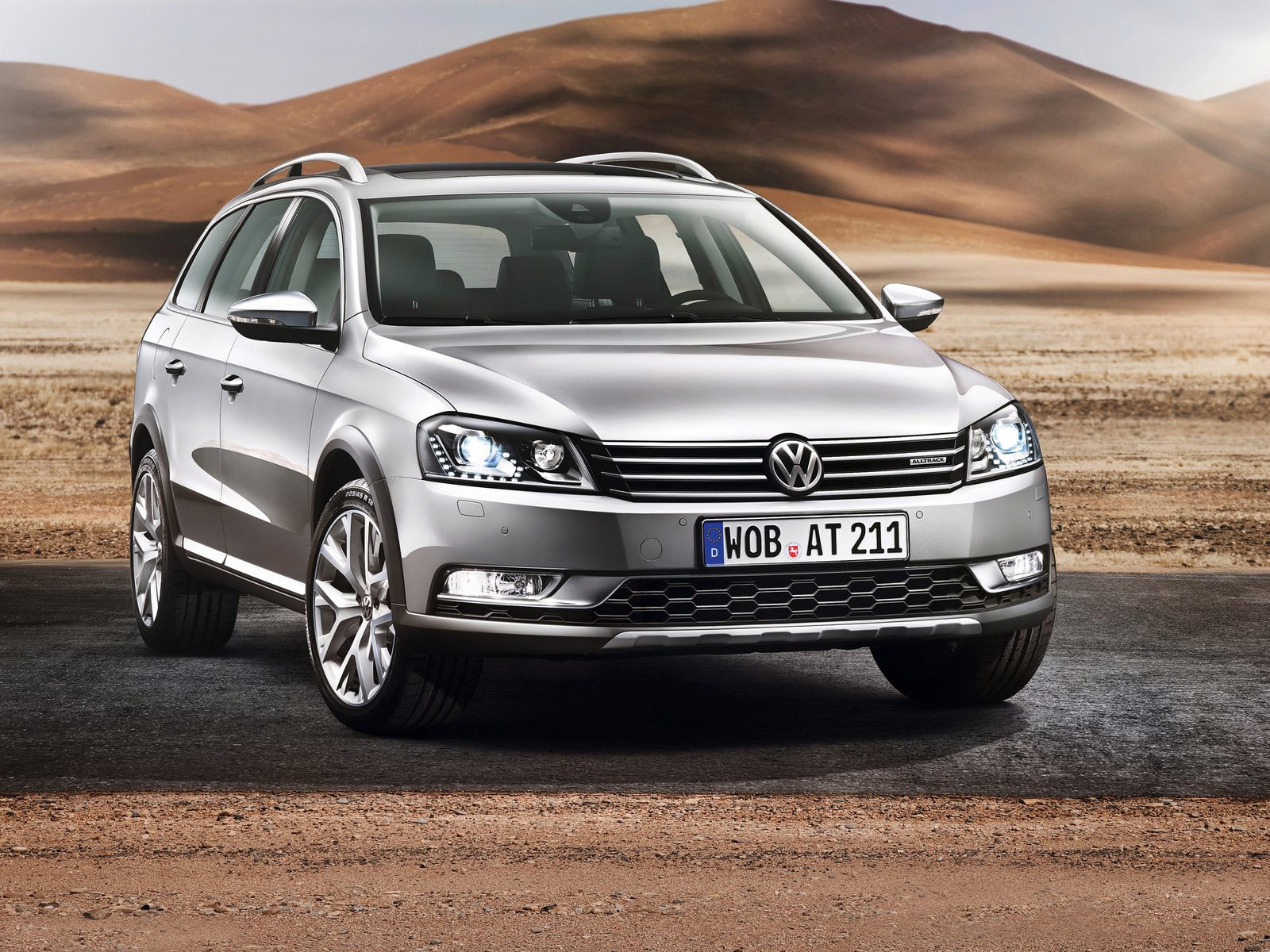
2013 Volkswagen Passat Alltrack


VW Passat Alltrack

Over the past four decades, well over 15 million Passat cars have been built. Along with its favourable all-round qualities, the success of the bestseller - which is sold on all of the world's continents - can be attributed to the Passat's wide and diverse range of versions. Now, Volkswagen is extending the model series with another specialist: the Volkswagen Passat Alltrack.

This new version is offered in an estate car configuration, and it closes the gap between the conventional Passat Estate and SUVs such as the Tiguan. The rationale here: many car drivers who use their car as a towing vehicle, or in light off-road situations, want a versatile, sporty and very roomy passenger car that has rugged qualities. Volkswagen developed the VW Passat Alltrack for this clientele. In comparison with the familiar Passat Estate, the new model is defined by new bumpers in SUV style - with wheel well and side sill flares. Its greater off-road ramp angle, approach angle, departure angle and higher ground clearance all make the Volkswagen Passat Alltrack an excellent SUV alternative for driving on unpaved track.

Two turbocharged direct injection petrol engines (TSI) with 118 kW / 160 PS and 155 kW / 210 PS and two turbodiesels (TDI) - also with direct injection - with 103 kW / 140 PS and 125 kW / 170 PS are available in the Volkswagen Passat Alltrack. The two most powerful Alltrack versions, the 170 PS TDI and the 210 PS TSI, have standard 4MOTION all-wheel drive and a dual clutch transmission (DSG). For the VW Passat Alltrack with a 140 PS TDI, Volkswagen will offer all-wheel drive as an option. Just how efficiently the engines of the VW Passat Alltrack operate together with the intelligently controlled 4MOTION all-wheel drive system is illustrated by the two TDI engines: the 140 PS version has a low combined fuel consumption of 5.7 l/100 km (equivalent to 150 g/km CO2), while fuel consumption for the 170 PS version is 5.8 l/100 km (152 g/km CO2).

The Volkswagen Passat Alltrack will debut in a world premiere at the 2011 Tokyo Motor Show; market launch for the new versatile Alltrack begins in early 2012.

2013 VOLKSWAGEN UP


VW Up

Volkswagen has redrawn the map of the small car world. The goal: to develop a small car with charisma, a small car with maximum space on a minimal footprint, a small car with the most fuel-efficient engines or an electric drive, a small car with intuitive infotainment and operating systems, a small car with the safety of a large car. The result is the new Volkswagen up! It measures a short 3.54 metres and is a specialist for everyday urban living that was thought through to the last detail. This car - like the larger Polo and the even larger Golf - will appeal to people of all ages and mobility wishes.

Affordable for everyone. In launching the up!, Volkswagen is not only putting a new car in motion; it is also redefining the parameters of customisation and financing. This means that along with clearly delineated equipment lines on the Volkswagen up!, new features will be offered such as up! boxes - e.g. box sets for shopping, long trips or for children on board. The up! will have an infotainment system that owners can tailor to their personal profiles using apps. And because a small car needs to be affordable, a new financing model known as AutoCredit2 that is exclusively tailored to VW up! buyers will offer greater financial freedom thanks to its flexible configuration options. And for many people, this will make the goal of driving a safe and economical new car more attainable than ever. Like the Beetle back in the 1950s, one could say that the Volkswagen up! is once again "democratising" car driving.

The up! will first be launched in the European market. It all starts in December 2011. There are 3 versions for different budgets and needs: take up! is the entry-level car, move up! the comfort-oriented one and high up! the top version. Directly at the car's market launch, there will also be 2 independent models based on the high up!: the up! black and the up! white.

New generation of engines
Debuting in the Volkswagen up! is a new generation of three-cylinder petrol engines. They output 44 kW / 60 PS and 55 kW / 75 PS. Combined fuel consumption as a BlueMotion Technology version (including a Stop/Start system): 4.2 l/100 km (60 PS) and 4.3 l/100 km (75 PS). Both of these 1.0-litre engines emit less than the 100 g/km CO2 limit. A natural gas engine with 50 kW / 68 PS with the same basic configuration will follow. Its combined fuel consumption of 3.2 kg/100 km (natural gas) is equivalent to a CO2 value of 86 g/km; as a BlueMotion Technology version the natural-gas powered up! even attains a low CO2 value of 79 g/km. There are also definite plans for an up! with an electric drive for the year 2013.

First small car with City Emergency Braking
An important new safety technology system is the optional City Emergency Braking. It is automatically active at speeds under 30 km/h, and it uses a laser sensor to detect the risk of an imminent collision. Depending on the vehicle's speed and the driving situation, City Emergency Braking can reduce accident severity by initiating automatic brake interventions - and possibly even avoid a crash. So far, the VW up! is the only vehicle in the segment to be offered with an emergency braking function for city driving.

Dimensions and styling for the world's metropolitan areas
With its noted 3.54 metre length and 1.64 metre width, the Volkswagen up! is one of the smallest four-seat cars. The Volkswagen is 1.48 metres tall. Its overall length consists of conspicuously short body overhangs and a very long wheelbase (2.42 metres) - a body layout that fully utilises the space available in the new design. Klaus Bischoff, Head of Design for the Volkswagen Brand says: "If the goal is to maximise space, the ideal form for a small car would be a rectangular box. In the up! we were able to sculpt such a box with a clean and powerful design that does not lose sight of space utilisation." The front end of the VW up! reveals much about the car's character. Klaus Bischoff: "The face is unmistakably that of a genuine Volkswagen, but with a very independent personality. Naturally, the familiar styling characteristics of our brand face can also be found on the up! - the emphasis of horizontal elements and the connection of the grille and headlights to form a band, the accents created by small angles and the characteristic light signature of the headlights. But more than on any of the other models, the Volkswagen up! definitely shows a smile. The up! is simply appealing, and it appeals in a simple way!"

Uncompromisingly good use of interior space
Space utilisation in the car is exceptionally good, because of its wheelbase - one of the longest in the segment - combined with an engine that is mounted well forward. Although the driver, front passenger and 2 rear passengers are travelling in a small car, it is by no means a cramped vehicle. On the contrary. Consider the boot: 251 litres are significantly more than is typical in the vehicle class of the up! When the rear seat is fully folded, cargo space even increases to 951 litres. These two values show that in its interior the Volkswagen up! will be a giant among small cars.

An interior design that is fun
Essentially, the up! interior has a very clean and well-organised layout. The new Volkswagen also offers numerous clever and detailed solutions, fun styling and a level of quality that will enhance the market segment. Especially high-end is the Dash Pad, an instrument pad extending crosswise in front of the driver and front passenger. Depending on the equipment line, either decor paint or one of the 5 body colours is used in the interior.

VW up! boxes - small things that make a big difference
The developers of the Volkswagen up! asked themselves whether everyday living with the car could be structured in a simpler and friendlier way. Their answer was a decisive yes! Because it is often the small things that make a big difference. And that is how the idea of the up! boxes came about. Small, lightweight boxes for a wide variety of situations and needs. Take the "kid box", for example, that was designed for parents with small children; it includes a bag for the thousand small items that are essential with small children; and of course a toy to cuddle with and a lunch box for the obligatory snacks. Other Volkswagen up! boxes will be called the "city box" and the "travel box". And their names are their agendas.

maps + more - the Portable Infotainment Device (PID)
For the first time in a Volkswagen, the maps + more system is now being offered, a mobile Portable Infotainment Device (PID). In the economically priced up!, this is a system that is equally economical and was developed to organise the navigation, telephone, information and entertainment areas. In cooperation with Navigon, one of the world's leading suppliers of navigation systems, a special solution was tailored to the up! which is affordable for all buyers - maps + more. The user simply snaps the PID into place above the centre console. Unlike many other similar systems of this type, maps + more melds with the car's network of systems much better: navigation, telephone and infotainment can now be controlled and viewed via the PID touchscreen, and the touchscreen can also be used to view important vehicle information, such as the visual display of the ParkPilot (controls the car's distance to the next vehicle). Apps specially developed for the VW up! also let users extend maps + more to meet their specific needs.

2012 Volkswagen Tiguan


VW Tiguan

The new VW Tiguan is here. An SUV with design parallels to the larger Touareg. An SUV with powerful and at the same time fuel-efficient engines; fuel consumption is 5.3 litres per 100 km for the two front-wheel drive Volkswagen Tiguans 2.0 TDI with BlueMotion Technology (81 kW / 110 PS and 103 kW / 140 PS). An SUV that shuts off the engine completely whenever possible in city driving thanks to a Stop/Start system. An SUV that is an ideal, versatile companion for life on the move with its excellent all-round characteristics, great practicality, 1,510 litres cargo space, up to 2,500 kg trailer load (with 4MOTION all-wheel drive) and many cleverly designed features. A Volkswagen in the best sense of the word! In Germany, the perfected Tiguan will arrive on the market in mid-June 2011; other European countries will follow at the beginning of August, and overseas markets at the end of August.

1 SUV, 2 worlds

The front end design was completely reinterpreted. The Volkswagen Tiguan is still the only SUV in its class that can be ordered in two different versions: one for on-road use and one specially tuned for off-road driving. Visually, the two models differ in their front ends ("On-road" has an 18 degree angle of approach, "Off-road" 28 degrees). Both models now show greater independence, better dynamic performance and more stylistic precision. In addition, like the on-road version, the off-road version is now also available with a top equipment line. In this case, the off-road specialist is known as the Track & Style (on-road: "Sport & Style").

High-tech safety systems

With the model change, new assistance systems such as Fatigue Detection (standard on the "Sport & Style" and "Track & Style"), the camera-based main beam control systems Light Assist (H7 lights) and Dynamic Light Assist (bi-xenon headlights) as well as the Lane Assist lane-keeping system now expand the range of features available on the VW Tiguan. Also new in the Tiguan: the XDS electronic differential lock.

110 PS to 210 PS

Powertrain technologies have become even more fuel-efficient. Three of the seven engines offered in Europe - all of them charged four-cylinder direct injection engines - are new to the Tiguan line-up. The four torque-strong petrol engines (TSI with 1.4 to 2.0 litres displacement) produce between 90 kW / 122 PS and 155 kW / 210 PS. The three powerful diesel engines (TDI) span a power range from 81 kW / 110 PS to 125 kW / 170 PS. Also available as an option on the new Volkswagen Tiguan is the 7-speed dual-clutch transmission (DSG) - one of the most efficient and sporty automatic transmissions.

One of the most fuel-efficient SUVs in the world

All BlueMotion Technology versions of the Tiguan have a Stop/Start system and battery regeneration. The results: even with all-wheel drive, the 103 kW / 140 PS Volkswagen Tiguan 2.0 TDI 4MOTION BlueMotion Technology, for example, consumes just 5.8 l/100 km! Clearly, this Volkswagen is one of the most fuel-efficient SUVs in the world. As before, entry-level engines are being offered with front-wheel drive. And the 140 PS TDI is also available with front-wheel drive as an alternative. That is how this Volkswagen, as a TDI, was even able to break the 5.5-litre barrier with the noted 5.3 l/100 km fuel economy.


A bestseller right from the start
The new Tiguan is replacing a model that has experienced an exceptional history of success: in Germany, after its market launch in 2007, the Volkswagen Tiguan sprinted from a standstill to become the SUV market leader. And it never gave up this position: Although the launch of the new Tiguan was announced by Volkswagen in February 2011, the "old" model continued to rank first in new car registrations for all SUVs in Germany. Even more impressive: until shortly before its production stopped it was the fourth best-selling passenger car after the Golf, Polo and Passat. Very few cars - wherever they may be located in the world - experience such a successful finale!

An SUV for all continents
Internationally, the VW Tiguan has long been one of the most sought after Volkswagens as well. Its highest volume markets are all of Europe, Russia, the USA, China, Brazil and Australia. In Germany, its average market share in the compact SUV segment was about 21 percent in 2010, while it was 12 percent across Europe. In total, nearly 700,000 Tiguans have been delivered worldwide since Autumn 2007. The smaller brother of the Touareg is now poised to continue this success with a new look and further advanced technologies.

Exterior
The Volkswagen Tiguan is one of the most successful automobiles of its kind. Since the bestseller debuted in Autumn 2007, nearly 700,000 units have been delivered across five continents. Key reasons for the SUV becoming a global success were its technical properties and great economy. In parallel, the Volkswagen scored highly with its distinctive, timeless and appealing styling. Nonetheless, Volkswagen has further developed the lines of the Tiguan - which is always a four-door model. In particular, the front and rear sections were redesigned to reflect Volkswagen's new design DNA.

Like the previous model, the new Volkswagen Tiguan is also once again offered in two body versions with different angles of approach. While the classic version, with an angle of 18 degrees, was designed more for urban challenges and the skills of a towing vehicle, the Tiguan with the larger 28 degree angle of approach is ideal for all those who frequently drive their Volkswagen in tough terrain.

Because their front ends differ, the two versions have different lengths: the Volkswagen Tiguan with an 18-degree front measures 4,426 mm, while its counterpart with a 28-degree front measures 4,433 mm. However, they are identical in width (1,809 mm without door mirrors and 2,041 mm with door mirrors) and in height (1,686 mm without roof rails, 1,703 mm with roof rails). Also identical are their wheelbases (2,604 mm) and track widths (front 1,569 mm, rear 1,571 mm).


Styling of the new Tiguan
The new styling differentiates the two body versions more than before. Yet, both VW Tiguan versions have adopted the Volkswagen "design DNA" that is marked by a dominance of clear horizontal lines. Like on the larger Touareg, the grille is upgraded with two double chrome louvres. Especially distinctive are the optional bi-xenon headlights with masked main beam (Dynamic Light Assist); the standard daytime running lights of the xenon version are formed by a band of 14 LEDs integrated in the headlights.

18 degrees: Volkswagen is offering the sporty on-road model in the two versions "Trend & Fun" (base version) and "Sport & Style". Beneath the lateral surface of the painted bumper, the "urban" front end exhibits a broad grille in the middle and two smaller openings towards the sides with front fog lights incorporated there. A rugged black front spoiler finishes the lower section. The overhang angle in front is the mentioned 18 degrees. With 90 kW / 122 PS (TSI) and 81 kW / 110 PS (TDI), this Tiguan is built as a front-wheel drive vehicle.

28 degrees: The powerful off-road version is offered in the "Track & Field" equipment line (base model) that is familiar from its predecessor and in a new top version for the first time: the "Track & Style". With a 28 degree angle of approach, the Volkswagen Tiguan can handle even greater challenges off-road. Beneath the rugged redesigned bumper, underbody protection ensures the well-being of the powertrain components. Visually, the central air intake is designed to be very flat to aid underbody protection. Here too, the bumper is bordered by the protected, integrated fog lights towards the sides of the SUV. The grey underbody protection itself, which has three distinctive openings, is framed on both sides by black air-flow guides. Off-road versions of the Tiguan are always equipped with 4MOTION permanent all-wheel drive.

Rear section
One of the features which denotes all new Volkswagens is distinctive rear lights. This also applies to the redesigned two-part rear lights of the Tiguan. Inside, the lights now reflect the look of the Touareg's rear lights with dual L-shaped elements. The lower border of the rear lights, now consistently following a horizontal line, makes for a new, even cleaner design in the area of the C-pillars that gives the entire rear section a higher-end appearance.

At the rear, all Tiguan versions have an angle of departure of 25 degrees. This angle may of course be reduced by vehicle payload (the same is true of the approach angle at the front end).

Side profile
A clear, powerful design dominates the SUV's side profile too. The design here incorporates solid yet modestly trimmed wheel housings, a window line that rises towards the rear, distinctive door and wing surfaces, and - also typically Volkswagen - unmistakable C-pillars. Every detail follows a logic of form that unites the whole. A range of new alloy wheels visually distinguishes the Volkswagen Tiguan from the previous model. In Germany, the "Trend & Fun" and "Track & Field" versions are equipped with 16-inch alloy wheels ("Portland" type) as standard; the Tiguan "Sport & Style" and "Track & Style" equipment lines leave the factory on 17-inch alloy wheels ("Philadelphia" type).

In side profile, the "Sport & Style" and "Track & Style" versions are distinguished from the base models by chrome trim on the side rubbing strips. All models share a ramp angle of 20 degrees and 200 mm ground clearance and - in the top versions - silver anodised roof rails.

Passive safety of the VW Tiguan
The previous Tiguan model attained a maximum five star rating in crash testing by the European consumer protection organisation EuroNCAP (New Car Assessment Programme). The American IIHC (Insurance Institute for Highway Safety) also named the SUV its TOP SAFETY PICK; this evaluation covers extensive measures in the areas of active and passive safety. The latest version of the Tiguan is definitely one of the safest cars as well. Its safety is built on the strong foundation of its rigid occupant cell, its deformation zones and the restraint systems that are tuned to them.


Restraint systems
The Volkswagen Tiguan is delivered with 5 head restraints that can adjust very high (distance to head is also adjustable in front seats from "...& Style"), 2 front airbags, 2 side airbags (front) and 2 head/thorax airbags; the latter cover the entire lateral surface of the windows. The Volkswagen may also be ordered with two side airbags in the rear as an option. It is always possible to deactivate the front passenger airbag, when a small child is travelling in a rear-facing seat. The status of this airbag is reported to the driver by an indicator light. Standard Isofix fitting points in the rear seating locations complete the protective measures for children.

Integrated at the front and outer rear seating positions are seatbelt force limiters that reduce chest loads. Belt tensioners for the front seats, which are electrically ignited by a central control module in an accident of sufficient severity, ensure that the movements of occupants are coordinated to vehicle deceleration early on. Along with rear side airbags, the optional rear safety pack includes belt tensioners for the outer rear seats. The systems are networked with one another: the airbag triggering system, for example, interfaces with all relevant control modules and ensures that the hazard lights are activated, all doors are unlocked, the interior lights are switched on and the fuel pump is deactivated in the case of a crash.

Interior
One of the key factors in the Tiguan's success is the versatile, sophisticated and user-friendly design of its interior. This may sound obvious, but it is not. All user controls and systems activate their functions without delay. A user's manual? There is one. But it is seldom needed. The seating concept is just as practical. Volkswagen Tiguan owners appreciate the higher, upright seating positions in the front and rear. Another impressive feature is that the 60:40 split rear bench that can be adjusted forwards and backwards by up to 16 cm and also reclined. Cargo capacity ranges from 470 to 1,510 litres, depending on the rear seat configuration. In addition, the seat back of the front passenger's seat can be folded down completely in the "Sport & Style" and "Track & Style" equipment versions; this lets customers stow objects measuring up to 2.5 metres in length.

Inside the base versions of the 2011 Tiguan, the new seat covers in "Pakata" design are eyecatching. The bezels around the air vents will now be in "Dark Rhodium." Meanwhile, the top models are identified by details such as decorative door strips in "Silver Metallic" and new Alcantara and fabric seat covers ("Milan" style). The Volkswagen Tiguan's range of standard features was also significantly extended. For example, standard features on the Tiguan "Sport & Style" (and the new Tiguan "Track & Style") will now include Fatigue Detection, rain sensor, automatically dimming rear-view mirror and RCD 310 audio system with 8 loudspeakers (see chapter "Equipment lines and features" for more on this).


Cockpit
The instruments are sophisticated - both visually and to the touch - and they are laid out optimally; all controls are located where one would intuitively expect them. Consider the dashboard: located right at the top - optimally integrated in the visual fields of the driver and front passenger - is the audio or audio-navigation system. Buyers can choose from the radio-CD systems RCD 210 (standard in "Trend & Fun" and "Track & Field"), RCD 310 (standard in "...& Style"), RCD 510, the RNS 310 with navigation that is an extension of the RCD 310 or the RNS 510 radio-DVD navigation system. Two air vents are located to the left of the audio system and two to the right of it. Appearing on the level beneath are controls for the standard air conditioning system.


Front seats
The VW Tiguan's seating system is available in two different configurations. Even in the "Trend & Fun" and "Track & Field" versions, the SUV is delivered with seats that offer height and lumbar support adjustments. As mentioned, the "Sport & Style" and "Track & Style" equipment lines have higher positioning. In these lines, sport seats are used, and there is a storage drawer under each of the front seats. The seat back of the front passenger's seat can also be folded completely forwards.

Rear seats
The 60:40 split rear bench is slightly elevated in relation to the two front seats; the middle section of the bench seat back can be folded down, so that it can be used as a centre armrest, drink holder, table or cargo pass-through. Independent of this feature, the rear seat back angle can be adjusted over a range of 23 degrees. The seats can be adjusted over a longitudinal range of 16 cm.

Bootspace
The cargo space of the Tiguan is cleanly designed, variable and practical with a level surface. With five persons aboard the vehicle, it can accommodate 470 litres. Its maximum cargo capacity is 1,510 litres with a maximum payload of 670 kg.

Drive technologies
The latest version of the Tiguan is once again exclusively powered by direct injection and charged engines. Besides versions with permanent all-wheel drive (4MOTION), front-wheel drive is being offered again in certain Tiguan versions as well. Three of the seven engines are new to the Volkswagen Tiguan line-up. The 4 petrol engines (TSI) output between 90 kW / 122 PS and 155 kW / 210 PS. New are the 3 TSI engines with 118 kW / 160 PS, 132 kW / 180 PS and 155 kW / 210 PS - they all bring 10 PS more to the dynamometer than the previous model, without increasing combined fuel consumption.

The 3 diesel engines (TDI) develop 81 kW / 110 PS, 103 kW / 140 PS and 125 kW / 170 PS. All Tiguans with BlueMotion Technology (BMT) also have a Stop/Start system. Fuel consumption values of the new SUV were reduced by up to 0.3 l/100 km. In the case of the front-wheel drive Tiguan 2.0 TDI BlueMotion Technology with 81 kW / 110 PS and 103 kW / 140 PS, for example, combined fuel consumption is just 5.3 l/100 km. Also setting standards is the all-wheel drive Tiguan 2.0 TDI BlueMotion Technology with 103 kW / 140 PS and 5.8 l/100 km. This makes the Volkswagen one of the most fuel-efficient SUVs in the world.

All 7 engines ideally fit the SUV character profile with torque-strong performance and maximum torque outputs ranging from 200 to 350 Newton metres; 3 of the engines may be combined with a 7-speed DSG transmission. A new option available on all versions is the XDS electronic differential lock, which perfects vehicle dynamics especially when driving through bends.

The VW Tiguan offers an impressive trailer towing capacity of up to 2,500 kg, depending on the specific drive configuration - so, the Tiguan offers just as much fun as it does utility-oriented functionality. An overview of all powertrain versions that will debut over the course of 2011:

Front-wheel drive
    * 1.4 TSI - 90 kW / 122 PS (6-speed) / BMT
    * 1.4 TSI - 118 kW / 160 PS (6-speed) / BMT
    * 2.0 TDI - 81 kW / 110 PS (6-speed) / BMT
    * 2.0 TDI - 103 kW / 140 PS (6-speed) / BMT

All-wheel drive / 4MOTION
    * 1.4 TSI - 118 kW / 160 PS (6-speed)
    * 2.0 TSI - 132 kW / 180 PS (6-speed, optional DSG)
    * 2.0 TSI - 155 kW / 210 PS (6-speed, optional DSG)
    * 2.0 TDI - 103 kW / 140 PS (6-speed, optional DSG)
    * 2.0 TDI - 103 kW / 140 PS (6-speed, optional DSG) / BMT
    * 2.0 TDI - 125 kW / 170 PS (6-speed)

1.4 TSI with 90 kW / 122 PS
The 122 PS Tiguan 1.4 TSI will always be delivered as a BlueMotion Technology version with front-wheel drive and 6-speed manual gearbox. The Stop/Start and battery regeneration systems are both standard here. This Tiguan can be ordered in the "Trend & Fun" and "Sport & Style" equipment lines.

This most fuel-efficient petrol engine of the Volkswagen Tiguan has a combined fuel consumption of 6.5 l/100 km (equivalent to 152 g/km CO2) and develops its maximum power at 5,000 rpm. The turbocharged TSI's maximum torque of 200 Newton metres is available between 1,500 and 4,000 rpm. The four-cylinder engine enables a top speed of 185 km/h. The Tiguan with the 1,390 cm3 engine handles the classic 0 to 100-km/h sprint in 10.9 seconds.

1.4 TSI with 118 kW / 160 PS
At the next power level, Volkswagen will be introducing a turbo- and supercharged twincharger engine with 118 kW / 160 PS (at 5,800 rpm) some time after the market launch of the new Tiguan. It will be offered with either front-wheel drive (as "Trend & Fun" or "Sport & Style") or in a BlueMotion Technology version with all-wheel drive (as "Track & Field" and "Track & Style"). The TSI develops a maximum torque of 240 Newton metres between 1,500 and 4,500 rpm. The Tiguan 1.4 TSI BlueMotion Technology with a power of 160 PS and a top speed of 203 km/h has a combined fuel consumption of 6.7 l/100 km (equivalent to 156 g/km CO2).

2.0 TSI with 132 kW / 180 PS
Completely new to the Volkswagen programme is the 2.0-litre TSI with 132 kW / 180 PS. This engine, specially configured for the new Tiguan, replaces the 125 kW / 170 PS TSI of the previous model. The new four cylinder shares the same technical platform as the larger 155-kW TSI which is also new in the Volkswagen Tiguan. Like that engine, the 132-kW TSI has a displacement of 1,984 cm3. Thanks to turbocharging, the direct-injection engine delivers a constant maximum torque of 280 Newton metres between a low 1,800 and a high 5,000 rpm; the four cylinder unit produces its maximum power over a range from 4,500 to 6,200 rpm. The engine - which is available with all equipment lines and which is always coupled with 4MOTION all-wheel drive - has a combined fuel consumption of just 8.5 l/100 km (per DIN EN 228); this is equivalent to a CO2 value of 199 g/km. The Tiguan 2.0 TSI with its 180 PS accelerates to 100 km/h in just 8.3 seconds; its top speed is 204 km/h.

As an option, this TSI may be ordered with a 7-speed DSG transmission. In this case, its combined fuel consumption is 8.6 litres (also at 199 g/km CO2). The top speed of the DSG version is slightly lower at 202 km/h, but its 0 to 100 km/h acceleration time is better at 7.9 seconds. All of these figures illustrate why the DSG is one of the most efficient automatic transmissions in the world. This TSI may be combined with any of the equipment lines.

2.0 TSI with 155 kW / 210 PS
The new Tiguan with the most powerful petrol engine will follow shortly after market launch. It produces 155 kW / 210 PS (between 5,300 and 6,200 rpm) and replaces the 147 kW / 200 PS TSI of the now discontinued previous Tiguan model. Its maximum torque of 280 Newton metres is constantly available from 1,700 to 5,300 rpm. The 210 PS engine takes the vehicle to a top speed of 215 km/h; this Tiguan accelerates to 100 km/h in 7.8 seconds. Despite its high power output, the TSI is also fuel-efficient: in the 180-PS TSI, for example, combined fuel consumption is 8.5 l/100 km (equivalent to 199 g/km CO2) with a manual 6-speed gearbox.

Volkswagen will also offer the large Volkswagen Tiguan 2.0 TSI with an optional 7-speed DSG. Its combined fuel consumption is 8.6 l/100 km (199 g/km CO2); after just 7.3 seconds (!), the DSG version is moving at 100 km/h. Its top speed is 213 km/h. This TSI will be available in combination with the "Track & Style" and "Sport & Style" equipment lines.

2.0 TDI with 81 kW / 110 PS
All three TDI engines operate with common rail injection, turbocharger, intercooler, four cylinders and an engine displacement of 1,968 cm3. The entry-level engine of the Tiguan diesel line-up is the 81 kW / 110 PS (at 2,750 to 4,200 rpm). This engine is ideal for customers who put a high priority on maximum fuel economy. This engine - always combined with BlueMotion Technologies (Stop/Start system and battery regeneration) and front-wheel drive - has a combined fuel economy of 5.3 l/100 km (equivalent to 139 g/km CO2). This contrasts with a hefty maximum torque of 280 Newton metres (between 1,750 and 3,000 rpm). So, the "small" TDI is really an excellent fit for the Tiguan.

If necessary, the Tiguan 2.0 TDI with 110 PS and 6-speed gearbox can accelerate to precisely 175 km/h. It finishes the sprint to 100 km/h in 11.9 seconds. This TDI may be combined with the "Trend & Fun" and "Sport & Style" equipment lines.

2.0 TDI with 103 kW / 140 PS
The 103 kW / 140 PS (at 4,200 rpm) VW Tiguan 2.0 TDI with 4MOTION all-wheel drive was already associated with low fuel consumption. Now, at 6.0 l/100 km (equivalent to 157 g/km CO2) it betters the previous model with its 6.3 l/100 km. This TDI may be ordered together with any of the equipment versions and - optionally - with the 7-speed DSG (6.3 l/100 km and 167 g/km CO2). Any of the 4 equipment versions may be configured with this engine. The manual gearbox version has a top speed of 186 km/h, while the DSG version can go to 188 km/h. An important benefit of this Tiguan: its towing capacity of up to 2,500 kg.

In addition, there will once again be a 140 PS Tiguan 2.0 TDI BlueMotion Technology with front-wheel drive (as "Trend & Fun" or "Sport & Style"). Its combined fuel consumption: 5.3 /l 100 km (139 g/km CO2). Also expected to be in very high demand is the new Tiguan 2.0 TDI as a 140 PS version with all-wheel drive and BlueMotion Technology: with a manual gearbox, it consumes a low 5.8 l/100 km and with a DSG transmission 6.0 l/100 km. All versions of the 140 PS TDI are characterised by a very high maximum torque of 320 Newton metres between 1,750 and 2,500 rpm.

2.0 TDI with 125 kW / 170 PS
The most powerful 125 kW / 170 PS Tiguan TDI, which always comes with all-wheel drive, has a combined fuel consumption of 6.0 l/100 km (equivalent to 158 g/km CO2); this is also 0.3 litres less than on the previous model. It produces its maximum power at 4,200 rpm. Between 1,750 and 2,500 rpm the engine develops a maximum torque of 350 Newton metres - enough power and force to accelerate the Volkswagen Tiguan to 100 km/h in 8.9 seconds with a top speed of 201 km/h. A version with 7-speed DSG is also planned. The top TDI can be combined with the "Sport & Style" and "Track & Style" equipment versions. Of course, like the 140 PS version, the 170 PS Tiguan can also handle up to 2,500 kg on its towbar.

Stop/Start system
The driver approaches a red light, brakes the Tiguan to a stop, shifts into neutral and takes the foot off the clutch (with DSG it is sufficient to press the brake pedal). This causes the engine to shut off momentarily. In the multifunction display the text "Start (A) Stop" appears. As soon as the traffic light turns green again, the driver depresses the clutch (or with DSG simply releases the brake), and the engine starts, the "Start (A) Stop" text is cleared, the driver engages a gear and resumes driving. Essentially, the driver does not need to perform any extra operating steps compared to a conventional car, yet saves up to 0.2 l/100 km in the city using the Stop/Start system.

Unlike vehicles without the Stop/Start system, the BlueMotion Technology models have an extra battery data module (for acquiring momentary battery charge status), a heavy-duty engine starter, a DC/DC converter (guarantees voltage stability in the vehicle's electrical system) and an exceptionally durable deep-cycle glass mat battery on board.

Battery regeneration
Regeneration helps to utilise the energy expended in driving as ideally as possible. During coasting and braking phases of the Tiguan - i.e. whenever the driver releases the accelerator pedal or brakes - the system elevates the voltage of the alternator (generator), and this electricity is used to bulk charge the vehicle's battery. Thanks to this alternator control as a function of engine efficiency, and the optimally charged battery that results, the voltage of the alternator can be reduced whenever this is desirable - e.g. when accelerating or while constantly maintaining a desired speed. The alternator may even be shut off entirely. This relieves engine load, which in turn reduces fuel consumption. In addition, the battery - always optimally charged - supplies the vehicle's electrical system with sufficient energy during the stopped phase of the engine (e.g. at traffic lights). Battery regeneration requires special software for energy management and modified engine controller software.

7-speed DSG
In Volkswagen's line-up of four-cylinder engines, DSG has replaced the conventional torque-converter automatic transmissions. In the new Tiguan, an extremely fast and efficiently working 7-speed DSG version is used. Its most prominent design characteristics - two dry clutches whose pressure is regulated hydraulically. Engine power is transmitted to the dual clutch via the crankshaft and a dual-mass flywheel. Clutch I handles the odd-numbered gears, and clutch II the even gears plus reverse gear. The results of this sophisticated clutch management: when shifting, there are no gaps in propulsive power. Comfort and convenience are excellent, and the driver experiences an incomparably dynamic yet comfortable shifting feeling.

Responsible for this - along with an intelligent electro-hydraulic transmission control (mechatronics) - are two clutches as well as two drive shafts and three final drive shafts. This networked system makes it possible to continually "lie in wait", ready to go into action at the next higher driving level. And indeed it is lightning-fast. Example: while the Tiguan is driven in sixth gear, the seventh gear is already engaged, but is not yet "active." As soon as the ideal shifting point has been reached, the clutch responsible for sixth gear automatically opens, while the other one closes and "pre-activates" seventh gear. This produces an overlap between opening and closing of the two clutches, and this leads to the comfortable shifting described above. The entire shifting process is completed within a few hundredths of a second.

4MOTION all-wheel drive
Normally, the front axle is driven in the 4MOTION system - including on the all-wheel drive Volkswagen Tiguan; the rear axle only gets ten percent of propulsive power. This saves on fuel. Not until necessary - based on the specific powertrain and carriageway situation - is the rear axle brought into play, step by step. This is done by an electrohydraulic all-wheel drive clutch. An important difference compared to the previous generation 4MOTION: no speed differences are needed between the front and rear axles to activate the all-wheel drive clutch, since pressure is built up via an electric pump.

The multi-plate clutch system itself was integrated in the rear differential. The pressure reservoir is supplied with oil by an electric pump with a working pressure of 30 bar. An electronic control unit computes the ideal drive torque for the rear axle and regulates, via a valve, how much oil pressure is transferred to the working piston of the multi-plate clutch. Here, the surface pressure on the clutch plates is proportional to the torque desired at the rear axle. The amount of transferred torque may be continuously varied by altering the magnitude of the pressure applied to the clutch plates. The system operates independent of wheel slip, since the working pressure is always available. When the Tiguan is driven off from a standstill or accelerated, wheelspin of the front wheels is fully prevented, since the control unit regulates the torque distribution based on dynamic axle loads. In extreme cases, nearly 100 percent of the drive torque can be directed to the rear axle.


XDS electronic differential lock
New aboard the Tiguan is the optional XDS electronic differential lock. It is a functional extension of the electronic locks already integrated via ESP. XDS improves handling when driving quickly through bends, and it calibrates the vehicle more in the direction of "neutral" by preventing potential wheelspin of the unloaded wheel at the inside of the curve by active brake intervention, thereby improving traction.

Equipment lines and features
In updating the new Tiguan, Volkswagen has also updated the equipment lines and engine line-up of its best-selling SUV. While there were 3 equipment lines before, there are now 4. Volkswagen is responding to the wishes of many VW Tiguan buyers who would like to order the off-road version ("Track...") - identified by its front end that is designed more for off-road duty - bundled with more elegant features ("...Style"). As a result, there will now be 2 on-road equipment lines, the "Trend & Fun" (base version) and "Sport & Style," as well as 2 off-road lines, the "Track & Field" (base version) and "Track & Style."

Tiguan Trend & Fun
The Tiguan Trend & Fun leaves the factory with an on-road front end (18 degree approach angle). In the base model of the series, the designation "base version" is really somewhat accurate. That is because features of the "Trend & Fun" version cover much more than just basic automotive needs. Theoretically, it would be possible for a customer to just configure the exterior colour and the interior upholstery pattern. And that is all. Everything necessary would be on-board - including a complete package of safety equipment, air conditioning and audio system. But naturally the Volkswagen Tiguan Trend & Fun also offers plenty of freedom to customise the SUV to the buyer's needs and wishes.


At market launch, this version will be available with 2 TSI (90 kW / 122 PS and 132 kW / 180 PS) and 2 TDI engines (81 kW / 110 PS and 103 kW / 140 PS). Key features include:
Safety: What is certain is that this Volkswagen always has the ESP electronic stabilisation programme, 6 airbags, seatbelt fastening detection with buckle-up warning, 5 height-adjustable head restraints (safety-optimised in front) and Isofix child seat anchors. For the first time in the Tiguan - in conjunction with comfort seats or "Vienna" leather upholstery - the head restraints for the driver and front passenger not only adjust in height, but horizontally in the distance to the head. Also standard: when the vehicle is braked hard, this activates the hazard lights. Tyre air pressure is also monitored and shown by an indicator. Important for an SUV with up to 2,500 kg allowable towing capacity is the trailer stabilisation programme that is integrated within ESP. New for the Tiguan Trend & Fun: daytime running lights. That covers safety.

Exterior: In the exterior area, the entry-level model in Germany is equipped with 16-inch alloy wheels ("Portland" type) and 215 tyres. Naturally, the bumpers, door handles and door mirror housings are painted in body colour. Chrome decorates the radiator grille frame and the fins of the grille. As is usual practice at Volkswagen, the body is galvanised and offers ideal corrosion protection. Heat insulating glass - a standard feature - protects against excessive sunlight.

Comfort and convenience: Features offering pure convenience and interior styling that already make the base version a higher level equipment line include a climate control system, new fabric upholstery in "Pakata" design, height-adjustable front seats with lumbar supports, new bezels around the air vents (in "Dark Rhodium" colour), electric parking brake with auto-hold function and Hill Climb Assist, electric windows all around and electric door mirrors, Multifunction Display Plus (including on-board computer function) and the RCD 210 audio system with four loudspeakers and CD/MP3 player.

Variability: As in the previous model, the rear bench has 16 cm longitudinal adjustment and a centre armrest that can be used as a table; the seat back angle can also be adjusted. Naturally, the asymmetrically split bench can also be folded down, resulting in a cargo capacity of up to 1,510 litres. A cargo cover hides goods behind the rear bench from curious onlookers, while a load sill guard protects the Volkswagen Tiguan itself.

Sustainability: All BlueMotion Technology models are also equipped with a Stop/Start system and a battery regeneration mode.

Tiguan Track & Field
Those buyers who choose the Tiguan version with a 28 degree approach angle get the "Track & Field" equipment line as the counterpart to the "Trend & Fun." The two versions are largely identical, but they are differentiated by off-road specific details.

Off-road pack: On the VW Tiguan Track & Field, this includes - along with a front end optimised for off-road drives including an engine underbody guard - an off-road mode, which awakens an entire network of assistance systems at the press of a button, to optimise drives on off-road terrain. Features integrated here include a compass display, Hill Descent Assist, even more precise metering of the accelerator pedal, gear pre-selection with optional DSG, and ABSplus; the latter operates the braking system with a different pulse frequency on loose driving surfaces, which can contribute to reduced braking distances - e.g. on gravel peaks. Inside, the Tiguan "Track & Field" also has bag hooks in the cargo area compared to the Tiguan "Trend & Fun."

At market launch, this version will be available with the 132-kW TSI and the 103-kW TDI.


Tiguan "Sport & Style" and "Track & Style"

The two top versions of the new Volkswagen Tiguan also share nearly all of their equipment features, with the exception of the off-road driving programme of the "Track & Style" and the different front ends. Compared to the previous model, the Tiguan Sport & Style with its 18 degrees front overhang angle has been significantly upgraded (all upgrades were also adapted to the new "Track & Style" with 28-degree front approach angle).

Exterior: In the exterior area, standard features - in addition to the content of the base versions - include front fog lights framed in chrome with cornering lights, roof rails (anodised silver), side sills with "Matt Chrome" trim strips, chrome trim on the side windows, tinted windows from the B-pillar back (65 percent light absorbing), and - in the case of the Tiguan Track & Style - a chrome border around the front air inlet screen. In addition, newly designed 17-inch "Philadelphia" alloy wheels are used.

Comfort and convenience: In their interiors and functionality, the two top models are characterised by the following details: new Fatigue Detection (first used in the current Passat), sport seats in front, seat covers in Alcantara / flat weave ("Milan" pattern), drawers under the front seats, decorative inserts in the doors (in "Silver Metallic") and chrome accents on the mirror adjustment and electric window switches. Also on board: the higher performance RCD 310 audio system with eight loudspeakers, an AUX-IN port, multifunction display "Premium," automatic running light switching (including "Coming Home / Leaving Home" function), rain sensor and automatically dimming rear-view mirror, front footwell illumination, folding tables on the seat backs of the front seats, front passenger seat back that folds forwards completely and a leather-trimmed 3-spoke steering wheel with aluminium accents.

Overview of VW Tiguan colours
12 exterior colours: The new Tiguan is available in 2 monochrome paints ("Candy White" and "Deep Ocean Blue"), 8 metallic paints ("Night Blue", "Pepper Grey", "Reflex Silver", "Silver Leaf", "Titanium Beige", "Toffee Brown", "Wild Cherry Red" and "Acapulco Blue") as well as the pearl effect paints "Deep Black" and "Venetian Green".

7 colour schemes for seat upholstery: Seat upholstery selections are the colour schemes "Brown / Titan Black" (fabric), "Quartz / Titan Black" (fabric), "Corn Silk Beige" (leather), "Furioso" (leather), "Titan Black" (fabric, Alcantara or leather) as well as "Taniami Beige" and "Flannel Grey" (both Alcantara / Milan flat weave from "...& Style").

6 alloy wheels: As mentioned, "Trend & Fun" and "Track & Field" versions in Germany have 16-inch "Portland" alloy wheels (5 dual spokes) as standard equipment. The "Sport & Style" and "Track & Style" lines have 10-spoke "Philadelphia" alloy wheels in 17-inch format as standard. Another option: 16-inch "San Diego" wheels for the Tiguan "Track & Field". In addition, customers can choose from 2 other 17-inch wheels styles "Boston" and "New Orleans") and one 18-inch wheel style ("New York").

Clever underway - optional systems of the new Tiguan
Enormous strides have been made in active and passive automotive safety as well as comfort in recent decades. Currently, it is the "intelligent" assistance systems that are further improving driving safety and convenience. A whole armada of other assistance systems are making their way into the new Volkswagen Tiguan. They include the automatic main beam light systems Light Assist and Dynamic Light Assist, Fatigue Detection, the Lane Assist lane keeping assistant as well as the latest generation of Park Assist parking support.

Since these systems are tailored to the budgets and priorities of individual customers, they are usually available as options or as part of a specific equipment line. For example, the new Fatigue Detection system is included as part of the Tiguan Sport & Style and the Tiguan Track & Style. In addition, advanced convenience technologies such as the perfected Keyless Access - an engine starting and locking system - are features more typical of the SUV luxury class. Moreover, clever technologies, such as the towbar that swivels out, simply make the VW Tiguan one of the most practical SUVs on the market. An overview of the most important systems:

Fatigue detection in detail
This system detects waning driver concentration and warns the driver with an acoustic signal lasting five seconds; a visual message also appears in the instrument cluster recommending that the driver take a break from driving. If the driver does not take a break within the next 15 minutes, the warning is repeated once. The rationale here: 25 percent of all motorway accidents can be attributed to over-tiredness of drivers - especially on long and monotonous stretches. Fatigue detection counteracts this situation. Right at the beginning of each car trip, the system analyses the driver's characteristic steering behaviour. Underway, the Fatigue Detection system then continually evaluates signals such as steering angle, use of pedals and transverse acceleration. If monitored parameters indicate a deviation from the steering behaviour recorded at the beginning of the trip, then visual and acoustic warnings are produced. Independent of this monitoring, whenever the system is activated it recommends a driving break to the driver after four hours of continuous driving.

This assistance system does not output warnings in acute cases of microsleep; instead, the Fatigue Detection system focuses on detecting early phases of lapses in concentration. As mentioned, the two top equipment lines are equipped with this system as a standard feature.

Dynamic Light Assist plus LED daytime running lights
Also new aboard the Volkswagen Tiguan is the masked continuous main beam headlight system known as Dynamic Light Assist. Dynamic Light Assist makes manual switching between dipped and main beam headlights a thing of the past. At speeds of over 65 km/h the main beam is automatically activated, and it remains permanently active. Here is how it works:

In conjunction with a camera integrated behind the front windscreen, the main beam light modules - in this case of the necessary bi-xenon headlights (including standard cornering lights and LED daytime running lights) - are individually dipped in specific areas in which the system has analysed potential glare to other vehicles in traffic. A masking aperture between the reflector with the mercury-free DS3 xenon filament and the lens makes this function possible. Along with an intelligent, lateral swivelling of the entire module (via the cornering light function) and individual control of the left and right headlights, this additional aperture geometry is able to mask the light source. This prevents light glare to oncoming traffic or vehicles ahead. What's more, thanks to the front camera, the cornering light module can detect the precise position of the vehicle ahead, and starting at speeds of 60 km/h it "shifts" its light pattern up to the vehicle's rear end, or even laterally past the car - also without causing glare.

Light Assist
For Tiguan models with conventional halogen headlights, a simpler variant of automatic main beam control is available: Light Assist. This main beam assistant is also a camera-based system that analyses the actually existing light sources in traffic and - based on its knowledge of a wide variety of traffic situations - it produces a dipped beam or main beam command. The main beam is automatically activated or deactivated from speeds of 60 km/h; this system also offers a considerable gain in convenience and safety.

Park Assist, Generation II
In contrast to first generation systems, which exclusively supported parking parallel to the carriageway, the latest parking assistant also offers assisted perpendicular parking - i.e. at right angles to the driving lane. The system is activated at speeds up to 40 km/h by pressing a button on the centre console. The driver indicates the side of the carriageway for parking by activating the indicator for that side.

Park Assist utilises its 12 ultrasonic sensors (4 front, 4 rear, 2 right, 2 left / range 4.5 metres) to detect a sufficiently large parking space, and then assisted parking can begin: the driver engages reverse gear and then only needs to accelerate and brake. The Tiguan handles the steering. The driver is assisted by acoustic signals and visual cues on the multifunction display. While parking, Park Assist reduces the car's speed to seven km/h. For the first time, this system can also brake the car actively in case of impending collisions. Nonetheless, the driver remains responsible for braking, since the new braking function of Park Assist cannot guarantee that damage will be prevented in all cases.

Comprehensive optimisations were made to the system compared to the first generation: essentially, Park Assist now enables parking in especially short parking spaces within the scope of what is technically feasible (vehicle length plus 80 cm; previously plus 140 cm), in bends, on kerbs and between trees and other obstacles. It does even more: because space can be in short supply when exiting a parking space, the new Park Assist also supports the driver in this situation up to a minimum available space of 50 cm in front of the vehicle.

Lane Assist
Lane Assist - an active lane-keeping system - autonomously and gently countersteers as soon as it becomes apparent that the car might leave the lane unintentionally. And it addresses a real concern: About 14 percent of all accidents with personal injury are caused by leaving the driving lane. Lane Assist can contribute toward reducing this rate. Incidentally, Lane Assist is suspended when the driver activates an indicator to change lanes intentionally. The system is activated from the multifunctional display. Afterwards, Lane Assist automatically takes effect starting at a speed of 65 km/h. Lane Assist acquires roadway markings via the camera near the rear-view mirror. It does not matter whether lane marking lines are continuous or broken. Lane Assist also works in the dark. However, if there are no detectable lane markings, the system does not take any action.

When Lane Assist is switched on, this status is shown to the driver in the instruments by a yellow indicator symbol in the form of a driving lane. As soon as the camera has located the relevant lane markings, the symbol turns green. Now the system is fully active. If there are indications that the car is leaving its lane, Lane Assist countersteers. A key aspect here is that countersteering is very continuous and gentle. Similarly, the driver can always "override" Lane Assist with minimal effort. The lane-keeping assistant does not react if the driver activates the indicator before crossing a lane marking.

DCC adaptive chassis control
DCC adaptive chassis control offers three programmes: "Normal," "Sport" and "Comfort." "Sport" and "Comfort" are selected by a button to the right of the gear shift lever. Crucial here is the fact that adaptive chassis control is constantly working to improve driving properties. That is because it continually adapts damping to road conditions and the driving situation. The system also reacts to acceleration, braking and steering inputs. The system resolves the apparent conflict of goals between a tight, sporty tuning and a comfortable ride. The significantly enhanced comfort is perceptible to both driver and passengers.

Safety-optimised head restraints with horizontal adjustment
In conjunction with the comfort seat pack or "Vienna" leather upholstery, the front head restraints are not only adjustable in height, but also horizontally. In this new design, the outer area of the head restraint can be pulled forward. Since it is closer to the head, the risk of whiplash trauma is reduced in case of an accident.

Swivelling trailer towbar
The Tiguan's 2,500 kg towing capacity (braked at 12 percent gradient) is further evidence of its top position in the segment. The highlight here: the trailer towbar with its cable system can be manually swivelled out or swivelled out of sight in just seconds. This eliminates the otherwise complicated and usually time-consuming assembly process including latching and closing. Dirty hands are also a thing of the past, because the cable with its ergonomic hand grip is at the upper left, under a separate cover on the bumper. This means that it is protected from dirt when the tailgate is closed, and it is inaccessible to unauthorised persons. The mechanism operates so smoothly that just a small push with the foot is enough to latch the system securely. A green LED lights up in the hand grip as soon as the towbar has been securely latched in place.

Panoramic tilt/slide sunroof
The panoramic sunroof (PSD) on the Volkswagen Tiguan has a roof cutout area of laminated glass that is 300 percent larger than that of a conventional Golf sunroof. The aerodynamically and acoustically optimised PSD consists of one glass segment for opening and one permanently fixed rear glass segment. The roof offers many adjustment and opening options, which are controlled by ergonomic switches in the roofliner. The panoramic sunroof system has pinch protection and an electrically operated sunshade that covers the entire glass area.

"Dynaudio Contour" audio, navigation and sound system
In the area of multimedia systems in the Tiguan, Volkswagen is offering such features as a MEDIA-IN interface (via USB), CD changer, radio-CD and radio-CD-navigation systems RCD 210 (standard), RCD 310, RNS 315 (navigation function for RCD 310) and RNS 510 (with such features as DVD drive, 30-GB hard drive, touchscreen, traffic sign display and SD card slot) as well as 2 different mobile telephone preparations. Upon request, the VW Tiguan can be transformed into a concert hall with 8 loudspeakers (300 Watts of audio power) together with digital 8-channel amplifier (in conjunction with the radio and navigation devices RCD 310, RCD 510, RNS 315 or RNS 510).